
January 21-22, 2027
WIN Summit Series Honolulu, Hawaii
Hosted by APEX & Supported by DAFT3, Pacific Impact Zone, & Encountering Innovation
Connecting defense innovators with government stakeholders and prime contractors to develop integrated Zero Trust Architecture solutions, address critical Indo-Pacific operational challenges, and accelerate pathways for technology transition.
About | Areas of Interest | Speakers | Apply | AMA Webinar




Event Details
The Summit at a Glance
ASK-ME-ANYTHING WEBINAR
Nov 10, 2026
1300 EST
SUBMISSION DEADLINE
Nov 20, 2026
1700 EST
SELECTION NOTICE
Dec 11, 2026
SELECTED COMPANIES NOTIFIED
THE EVENT
Jan 21-22, 2027
HONOLULU, HI

-
January 21 - 22, 2027
-
Honolulu, Hawaii
Specific venue details will be provided to selected participants.
-
U.S. businesses with no foreign-ownership or foreign-control conflicts.
-
No registration fee. Travel and participation costs are the responsibility of each participant.
Building Integrated Teams for Tech Transition
The Warfighting Integration Network (WIN) will be in Hawaiʻi on January 21–22, 2027. Alongside government, industry, academia, and capital provider partners, WIN aims to advance Zero Trust Architecture capabilities, supporting critical defense missions across the Indo-Pacific.
Through a facilitated Collaboration Transition Group (CTG), selected participants will work in integrated teams to address complex cybersecurity challenges that cannot be solved by a single technology alone.
Unlike traditional industry days or technology showcases, this event is designed to move beyond individual capabilities and foster meaningful collaboration. Participants will gain insight into operational requirements, combine complementary technologies, and develop integrated solutions for discussion with government and prime contractor stakeholders.

❯ What Participants Should Expect
The Collaboration Transition Group (CTG) is a facilitated collaboration event, not a traditional industry day or technology showcase.
During the 1.5-day event, teams will learn about the operational gaps, develop integrated solutions through WIN-facilitated teaming and collaboration, and present the integrated concepts for government and prime contractor stakeholder discussion.
WIN will gather feedback from attending government and prime contractors for each team, subject to stakeholder availability and authority. This is not an official Government evaluation or source-selection debriefing.
❯ Who Should Apply
Small businesses developing Zero Trust Architecture technologies
Nontraditional defense contractors and dual-use innovators
Technology companies with capabilities supporting cybersecurity and secure information sharing
Companies interested in collaborating with complementary technology providers
Pre-formed industry teams developing integrated Zero Trust solutions
Applicants should be prepared to collaborate, integrate capabilities, and work toward solutions addressing operational defense challenges
❯ Selected Participants Walk Away With:
Direct engagement with Indo-Pacific requirements owners. Government participants, including U.S. Pacific Command (US PACOM), U.S. Army Pacific (USARPAC), Pacific Air Forces (PACAF), and U.S. Space Force Indo-Pacific (SPACEFOR-INDOPAC), will share operational needs and meet with integrated teams to discuss their solution.
Prime contractor perspective. Prime contractors, including Dell Technologies, Leidos, and others to be announced, will also be in attendance to engage with each team on their integrated solution.
Written feedback. WIN will provide presenting teams with consolidated written feedback to help inform potential next steps and opportunities for continued engagement.
WIN will host a follow-on session connecting the teams with the greatest potential to interested Government and prime contractor stakeholders. These engagements could support further discussions around field experimentation, exercises, or prototype development, subject to stakeholder interest, available funding, and applicable authorities.
Areas of Interest
Five Mission Areas for Zero Trust at The Tactical Edge
Operating in the Pacific requires joint and allied forces to share information, coordinate long-range fires, and sustain contested logistics across vast distances, often when communications are degraded, intermittent, or unavailable. Zero trust implementations in this environment must work at the tactical edge as well as at the enterprise level.
The CTG focuses on five mission areas:
01
Coalition & Mission-Partner Access
Establish and continuously verify trusted identities for people and devices, including when disconnected from enterprise identity services, so U.S. forces, allies, and mission partners can access required information without exposing U.S.-only systems or sensitive data.
02
Distributed Device, Endpoint, and Legacy Platform Protection
Identify, monitor, and isolate compromised devices across islands, ships, aircraft, sensors, logistics nodes, and legacy mission systems that may not support conventional security agents.
03
Resilient Network Segmentation and Policy Enforcement at the Tactical Edge
Provide local segmentation, access control, and policy enforcement so distributed forces and long-range fires networks can operate securely without continuous access to centralized enterprise services.
04
Data-Centric Protection and Trusted Information Sharing
Protect the data: provenance, integrity, access, and movement of operational data used for joint, coalition, fires, and logistics coordination, even when it crosses networks or communications pathways that are not fully controlled.
05
Local Visibility, Analytics, and Automated Cyber Response
Detect and contain threats locally, within established authorities, so disconnected formations can preserve mission-essential services without waiting for a centralized security operations center.
You don’t need to cover all five.
Capabilities outside these areas may be considered when their operational relevance is clear.
Speakers
-

Brent M. Parker
CTR USPACOM PCJ7
-

Michelle R. Campbell
CTO, Directorate of Cyber Operations and Warfighter Communications PACAF
-

Jamie Andrews
Senior Space Acquisition SME, SpaceWERX
-

Andy Chun
PACRIM Territory Account Executive, Dell Technologies Federal
-
Ziggy Ramil
Sr. Director, Indo-Pacific Growth and Strategy, Leidos
How to Apply
Application Deadline: November 20, 2026
-
Submit the completed one-page template as a separate PDF. Complete all applicable fields: company name, address, point of contact, phone, email, title of technology, technology/capability, relevance to command, past performance of the technology and company, and maturity/scale/cost/schedule.
-
Submit the white paper as a PDF, including the cover sheet. White papers shall not exceed five pages. Use one-inch margins and an 11-point or larger readable font.
1. Company name and primary point of contact.
2. A concise description of the capability and its differentiators.
3. Identify your primary and secondary Zero Trust Area(s) your solution addresses.
4. Technology maturity and relevant demonstrations or deployments.
5. Integration methods, interfaces, APIs, standards, or interoperability information that may be shared.
6. The types of complementary technologies or providers that would strengthen the capability.
7. Known constraints or other information the facilitator should consider when forming teams.
PATHWAY 1: Individual Companies Prepared to Team
Individual companies must be prepared to collaborate, not simply pitch. WIN will form teams based on mission fit and the feasibility of their technologies to work together. Companies will receive proposed assignments before the event and may request reasonable adjustments. Where practical, WIN will avoid placing direct competitors on the same team.
Small businesses and nontraditional defense contractors are strongly encouraged to participate.
Each applicant must submit a completed capabilities quad chart and a white paper. Please review the requirements below.
PATHWAY 2: Pre-Formed Integrated Teams
Pre-formed teams should present an integrated solution built from complementary capabilities. They must explain the operational problem, how the technologies work together, the current state of integration, and what the team still needs to validate.
Each pre-formed team member shall still submit their own quad chart and white paper following the instructions below. When you apply, please click the Pathway 2 option. A designated lead from the Pathway 2 team shall also provide the summary coordinating information listed below with the application.
-
Submit the completed one-page template as a separate PDF. Complete all applicable fields: company name, address, point of contact, phone, email, title of technology, technology/capability, relevance to command, past performance of the technology and company, and maturity/scale/cost/schedule.
-
Submit the white paper as a PDF, including the cover sheet. White papers shall not exceed five pages. Use one-inch margins and an 11-point or larger readable font.
1. Company name and primary point of contact.
2. A concise description of the capability and its differentiators.
3. Which of the Zero Trust Area(s) of Interest your solution addresses.
4. Technology maturity and relevant demonstrations or deployments.
5. Integration methods, interfaces, APIs, standards, or interoperability information that may be shared.
6. The types of complementary technologies or providers that would strengthen the capability.
7. Known constraints or other information the facilitator should consider when forming teams.
-
The summary shall not exceed two pages.
• Names of the businesses proposing to attend as a pre-formed team;
• The Zero Trust theme addressed and a description of the integrated solution;
• The role of each company and current level of integration (if any) among the technologies;
• Relevant demonstrations, deployments, customers, or operational use;
• A proposed prototype, experiment, or other activity that could validate the integrated concept.
DISCLAIMER:
This Call for Participation supports AFRL market research activities under FAR Part 10. It is not a solicitation or request for proposals and does not obligate the Government, WIN, or any prime contractor to issue a solicitation, award a contract, provide funding, sponsor a demonstration, or pursue any other follow-on activity.
Application, selection, participation, feedback, and facilitated introductions do not constitute Government endorsement of any company, product, team, or proposed solution.
All costs of applying and participating, including travel, are the responsibility of each participant and will not be reimbursed.
Government personnel and employees of authorized support contractors may review submissions for participation selection, team formation, and event planning. Support-contractor reviewers may include employees of Parallax Advanced Research, Pacific Impact Zone, and Vertx Partners. Applicants should submit only information authorized for this purpose and must not include classified information, Controlled Unclassified Information unless approved in advance, proprietary information, trade secrets, source code, or other competitively sensitive information. Any later exchange of proprietary information must occur separately under appropriate protections.
Ask Me Anything Webinar
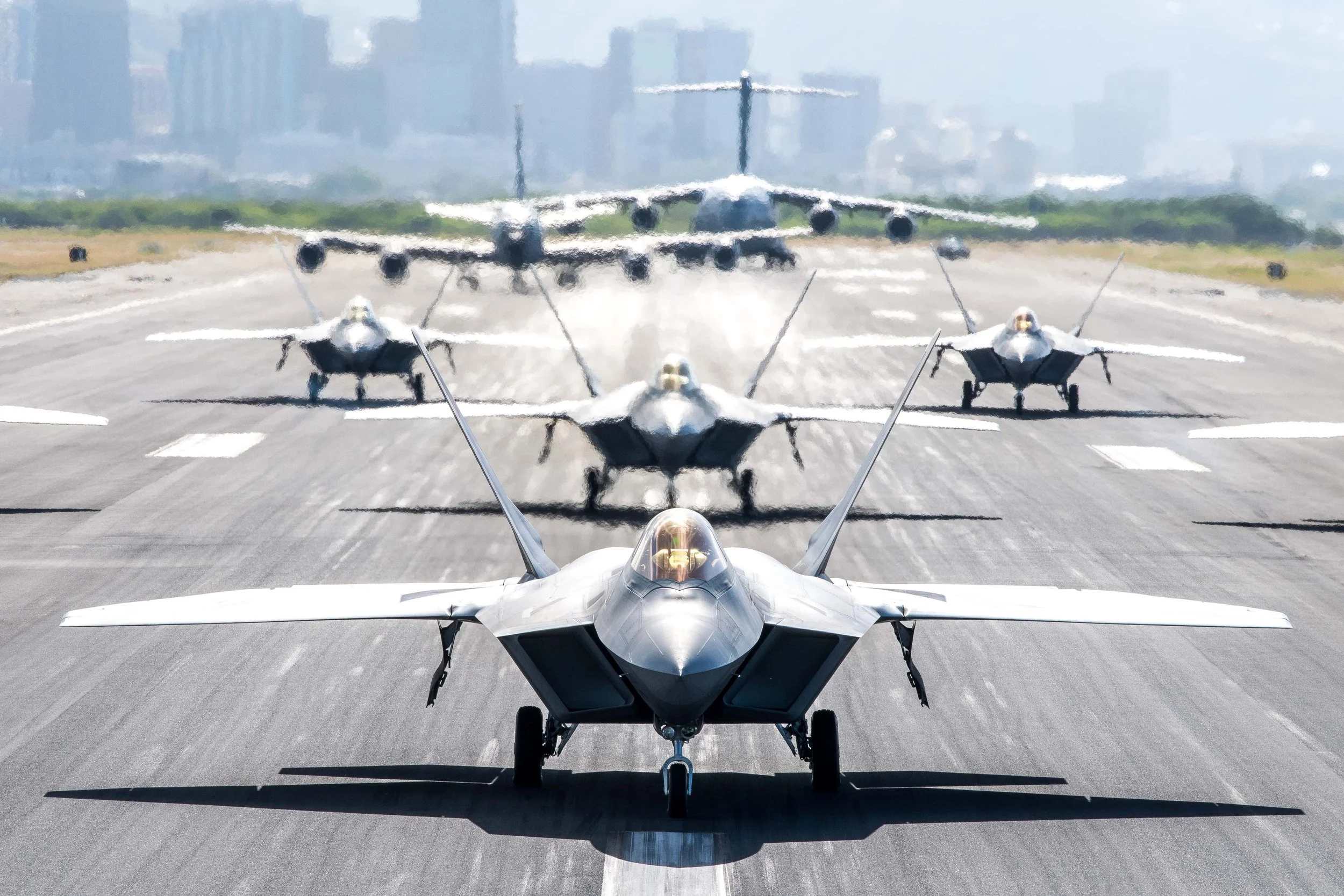
November 10th, 2026 at 1300 EST
Join us for a virtual Ask Me Anything (AMA) webinar ahead of the WIN Summit Series | Hawaii! Whether you have already applied or are interested in applying, this interactive session is your opportunity to ask questions, learn more about the event's focus on Zero Trust Architecture, and gain a better understanding of the application process and what to expect at the event
Frequently Asked Questions
-
There is no registration fee. Travel and other participation costs are not reimbursed.
-
No. Under Pathway 1, WIN forms the teams. Pathway 2 is for teams that already exist.
-
No. This supports AFRL market research under FAR Part 10 and is not a request for proposals.
-
There is no virtual option for this event.
-
For any questions, please contact Larry “LJ” Jordan at ljordan@pacimpactzone.com
About
About WIN
The Warfighting Integration Network (WIN) connects academic, small business, and government partners to accelerate defense innovation and technology transition.
Led by Parallax Advanced Research in collaboration with Vertx Partners, WIN is an executed program under the APEX (Academic Partnership Engagement Experiment) umbrella, delivering education, coaching, and connection services for nontraditional innovators nationwide.